Winterburn Chapel
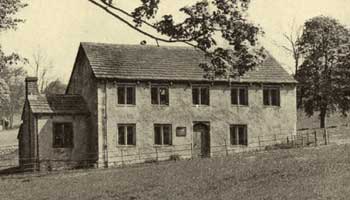
Winterburn Chapel-of-Ease circa 1933
A chapel is recorded in Winterburn from the 13th century, though the current building owes its existence to the dissenters of the 17th century. Roger Proctor lived at Coppercott and in his Will of 1517 he left 13s 4d for a “priest to sing for my soulle at Winterburn Chapel” . It is thought that this chapel was in the area around Friars Head and St Helen’s Well.
The manor of Winterburn belonged to Furness Abbey (Barrow-in-Furness), and was far more extensive than the township itself. Monks held courts for other surrounding parishes at Winterburn. The first Earl of Cumberland shortly before the dissolution had taken possession of the manor of Winterburn but was quickly compelled to give it back. Frpm the general survey of Furness Abbey 26th Henry VIII, 1534-5, in the ‘First Fruits Office’ are:
“Furness. Roger (Pyle) Abbot, rents of free tenants, Wynterburne Hall VIs. Vill of Wynterburne xL xS 11d. Freerhead (Friarshead) v111L 111s IVd . Cowper Coate VIIIL Xs, Cowhouse VIIIL. Hetton, Asheton, Flashby and Yarton (Areton – Airton) IXL IXs. In all LL XIIs VId.
These were extended rents. The estates were parcelled out after the dissolution of the monastaries by the Crown, with the reservation of certain small annual payments, which at the Restoration were granted to General Monk, and are still paid to the lords of the honour of Clitheroe, Waifs, Strays, Treasure Trove etc. But the manor of Winterburne , together with free warren within the same, and the mines and minerals within the leaseholds, was claimed by Thomas Wilkinson Esq. , and has been generally allowed. (from ‘History and Antiquities of the Deanery of Craven’)
The Toleration Act of 1689 allowed dissenters from the Church of England to set up their own licensed meeting places and the Winterburn Independant Presbyterian chapel was originally founded in 1694 in the home of Thomas Walley. The building seen today dates from 1703 when Thomas Whalley decided “to build a house for God” , and it was completed in 1704 with the following named as trustees:
Sir John Middleton of Calton, Bart. – Son in law of Barbara Lambert, daughter in law of
General Lambert
David Yates of Bordley, Gent
William Keighley of Rylstone,Yeoman
Comberback Leech of Calton, Clerk (Chaplain to Sir John Middleton)
The chapel deed states that:
“the said Thomas Whalley did hereto purchase two cottages called Brigghouses and a parcel of land called Brigg Garth and one of the said houses is demolished and a new edifice lately erected where it stood and the said Thomas Whalley is minded and disposed to settle the new- erected edifice to be a chapel, oratory, or meeting place for religious worship, upon trust to permit the same to be used and employed as a meeting place of a particular church or congregation of Protestants dissenting from the Church of England, the minister or Teacher to be an able Protestant minister of the gospel, who, in his judgement and practice as to church discipline, is Presbyterian … ”
The indenture conveying the chapel to the trustees stipulated that:
“ the minister ….to pray and preach God’s word, administer the Sacraments of the New Testament and perform all offices and duties belonging to that sacred function so as every such Minister etc. be orthodox and sound in the faith of the Lord Jesus Christ and such as hold and profess the Doctrinal Articles of the Church of England”
In 1708 Mrs Lambert left £100 to Thomas Whalley and the Chapel Trustees, for the support of such a minister, and in 1711 a memorandum was added to the deed saying that if the congregation of Winterburn and Horton should agree to hold joint meetings in a more convenient place “which is much desired by Mrs Lambert”, the trustees might convert the Winterburn Chapel either into a dwelling house for the minister or to any other use for the benefit of the congregation. For a long time the Presbyterians held services at Winterburn and Horton alternately.
Robert Hesketh, the minister in 1720, was summoned to appear before the Court “for suffering the doors of the meeting house to be shut at the time of their meeting — the said Robert Hesketh being the teacher of the said meeting” .
The chapel was placed in the care of the Skipton Congregational Chapel in 1848 and The Yorkshire Congregational Year Book reported “ This is one of the stations where from local circumstances, the population is frequently changing. Mr Richardson conducts service in the chapel every Sunday afternoon and for that purpose has to walk fourteen miles. His average congregation is fifty. In summer it is more, in winter it is less” .
In 1862 Mr Richardson appealed for donations towards the cost of renovation, saying “Winterburn Chapel is situated in a thinly-populated district, the amount of the population in the radius of four miles being about 700. The Parish Church is four miles distant and no place of worship nearer than three miles. Attendance on Sabbath days averages sixty-five. Persons comprising the congregation are chiefly farm servants” .
The cost of renovation was £152.
When Mr Richardson retired in 1871 the Chapel closed and was later reopened by the vicar of Gargrave as a chapel-of-ease remaining in use until about 1896. In 1906 after an appeal for gifts of furnishings by Archdeacon Kilner it again reopened and was used until the latter half of the 20th century.
The chapel was held by the Trustees of the Yorkshire Congregational Union, it was listed Grade 2 in 1954 and eventually sold in the 1980s to be converted to a dwelling.
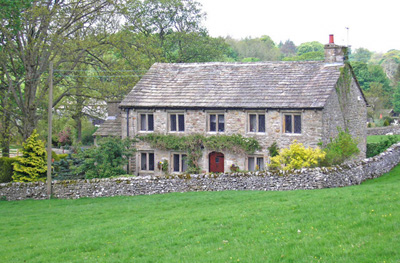

© Copyright John Illingworth and used under: Creative Commons License
Chapel Records
There are few records known to exist, the Baptisms listed below are in The National Archives and included in the IGI. Latterly it was attached to Gragrave church and entries would have been made in the Gargrave Parish Registers.
Baptisms at Winterburn Chapel (1811-1826 & 1836)
| Surname | Forename | Parents | Baptism date | Birth date |
| Waddington | Elizabeth | John and Mary | 20 MAR 1811 | |
| Waddington | John | John and Mary | 04 FEB 1813 | |
| Cook | William | Robert and Sarah | 27 NOV 1815 | |
| Cook | Ann | Robert and Sarah | 27 AUG 1815 | |
| Cook | Mary | Robert and Sarah | 14 NOV 1818 | |
| Thorp | Richard | Matthew and Mary | 05 NOV 1818 | |
| Waddington | Elenor | John and Mary | 27 MAY 1818 | |
| Birtwhistle | Elizabeth | Thomas and Ann | 02 DEC 1819 | |
| Edmondson | Joseph | Robert and Mary | 01 JAN 1819 | |
| Wotherup | Robert | Robert | 27 OCT 1819 | |
| Wharfe | James | John | 23 DEC 1820 | |
| Cook | Isabella | Robert and Sarah | 26 AUG 1821 | |
| Edmondson | Henry | Robert and Mary | 01 OCT 1821 | |
| Thorp | Dorothy | Matthew and Mary | 09 MAR 1821 | |
| Waddington | Edward | John and Mary | 02 MAR 1821 | |
| Wharfe | John | John | 17 DEC 1821 | |
| Blackburn | Alice | Thomas and Betty | 13 MAR 1822 | |
| Gregson | Richard | Richard and Martha | 24 APR 1822 | |
| Waddington | Thomas | Ann | 27 JUN 1822 | 01 JUN 1822 |
| Blackburn | Thomasin | Thomas and Alice | 15 JAN 1823 | 04 NOV 1822 |
| Cook | Grace | Robert and Sarah | 19 NOV 1823 | 05 OCT 1823 |
| Thorp | Edward | Matthew and Mary | 15 SEP 1823 | 09 MAY 1823 |
| Waddington | Samuel | John and Mary | 27 APR 1823 | |
| Wharfe | Elizabeth | John | 20 MAR 1824 | |
| Waddington | James | John and Mary | 24 NOV 1825 | 27 OCT 1825 |
| Cook | Alice | Robert and Sarah | 30 APR 1826 | 07 APR 1826 |
| Edmondson | Robert | Robert and Mary | 23 APR 1826 | 03 APR 1826 |
| Rawson | Martha | John and Mary | 16 DEC 1826 | 25 NOV 1826 |
| Barker | Joseph | Thomas and Margaret | 08 AUG 1836 | 27 JUL 1836 |
| Ingham | Elizabeth | James and Margaret | 27 NOV 1836 | 08 NOV 1836 |
 Malhamdale Local History Group